Thursday, March 17, 2011

South Asia Diaries - Jaipur


Jaipur was to be the last Indian city we would see on this (very short) tour before heading back to Kolkata for another wedding. We only had three days, so we spent one in Delhi, one in Agra, and now one in Jaipur. Even though Jaipur is only a 4 hour ride away from Delhi (same as Agra) we had chosen to fly. Why? Well, when I booked the tickets, booking the flight from Delhi-Jaipur was just CND$10 more. And boy, were we lucky!

The day we were supposed to travel to Jaipur, there were some protests around Delhi (over the price of onions!) and the onion farmers and resellers had completely blocked the highway from Delhi to Jaipur, even the rail tracks, so the only way to go there was by flight! Lots of people at the airport, trying to get last minute tickets, and here we were, having tickets by chance!

This, being India, things are of course never smooth. You have read of our "adventures" boarding the Kolkata-Delhi flight. Here, we were barely on time, and made it past security. So there we were, sitting on the plane, when the pilot announced there was something wrong with the plane, and they are going to, believe it or not, "reboot". And for some reason, the metal in the terminal was "interfering" with the readings (I think the pilot was a Dell technician in his previous life), so the plane was going to be towed to another location, and we all had to exit the aircraft.

Long story short, 2 hours later, we got another aircraft (thank God), and were finally underway, and reached Jaipur around 10.30 in the morning. And here is one thing you have to know.

The Indian exchange rate to the Canadian dollar is AMAZING! We were in the top luxury hotel in Jaipur, and it cost only $90 a night. This is five star luxury. The wife went for a spa treatment at the hotel with the works - it was $20. I booked a whole day's taxi for 8 hours - $40. A four course meal sent up to the room - $10!

Our tour started with the beautiful Hawa Mahal (Wind Palace).

The original intention of the 700 or so windows was to allow royal ladies to observe everyday life in the street below without being seen, since they had to observe strict "purdah" (face cover).

This pinkish colour of the bricks, present throughout EVERY house of Jaipur's Old City, behind the walls, is what gives Jaipur its nickname of "The Pink City". It is something to see, where EVERY building is the same colour and quite old.

Jaipur was also quite dirty - which was surprising after the clean Delhi. Perhaps Delhi was cleaned up for the Commonwealth Games 2010, but there were lots of tourists in Jaipur, and it was a shame they had to see the magnificient ancient stuff amidst dirty, really dirty, streets. Rubbish was scattered beside each street, flies were buzzing around and people just threw their litter wherever they wished.

Thanks to the strikes and blockades of the highway by the onion protests, there wasn't too many tourists in the city which made our visits really pleasant - none of the places were as crowded as they should have been. Our next stop was Jantar Mantar.


These are observatories made for the study of the heavens. As an amateur astronomer, it was fascinating. You don't need to spend a lot of time here, but it's something unique. There were structures made parallel to the earth's longitude, stairs that pointed north star, etc. As usual, I have posted a lot more pictures on Facebook.

Right next to Jantar Mantar was the City Palace, our next stop. It was the seat of the Maharaja of Jaipur (he still lives there!). It also houses a big museum.

Do these walls look familiar? The Bollywood epic Jodha Akhbar was shot on location in this city.

The vibrant colours of the palace reminded me of the multi-coloured houses of Venice.


A traditional puppet show in City Palace (traditional, yet they had a Michael Jackson puppet!).

Our next target was Amber Fort (also known as Amer Fort). This is where Jodha Akbar was primarily shot - and it's a bit away from the city.

We had to share the road with elephants!


Amber Fort is known for its artistic style, blending both Hindu and Mughal elements. The fort borders the Maota Lake.


Courtyard of the palace. The song "Azim-o-shaan Shahenshah" was shot on location here.

Sheesh Mahal (Palace of Mirrors) - a section inside the fort full of mirrors of intricate design and artwork all across the walls (and ceiling).

A garden where the Head Queen used to relax with her maidens and sing songs for the Maharaja (or so the guide told us).

A window where the Head Queen used to sit and watch the goings on in the courtyard while observing "purdah".

A view of the city below from the Maharajah's chamber.


Traditional Rajasthani bangles sold in what was the Royal Kitchen.

Our final stop of the day was Jal Mahal (Water Palace). The idea of visiting it in the evening was to see the lighting that makes for nice pictures.


Unfortunately, like many areas of India, it started to get shadier and shadier as darkness grew, so after waiting sometime we decided to retire to our hotel. We only caught the beginning stages of the lighting (pictures on Facebook), but it was still a nice sight.

Overall Jaipur was a nice stop. Many tourists do the whole Rajasthan trip, which includes Udaipur, Jaisalmer and few other cities (particularly for fans of the Satyajit Ray movie Shonar Kella). If we had time, I would also have done the same. It could get repetitive, with same type of fortresses, palaces etc. so you have to mix up your itinerary. You don't really need to book via a group travel agency, as everything is online and hotels take care of everything. However you have to stay in the top hotels which has the good facilities suitable for Westerners, otherwise Jaipur can be very backwards.

Once back in our hotel, they put on a Rajasthani dance show for the patrols, as well as a cultural show; not to mention a palmist - which every hotel had. Overall, our stay in Jaipur was a very pleasant one.

South Asia Diaries - Agra


Agra is anywhere between 3.5 to 5 hours drive away from Delhi, depending on traffic. We booked a taxi from the hotel in Delhi, to leave around 6.30 am in the morning. We ordered breakfast in bed (thanks to the fantastic currency exchange rate, a deluxe breakfast fit for a king cost 1.5 Canadian dollars). Then we were off.

The drive was - fascinating - and eventful - especially near some of the state borders where the drivers have to stop and fill out paper work, and you can be entertained (if you wish) by dancing monkeys. I had chosen a private taxi from the hotel rather than a chartered bus because the bus does other Agra sight seeing, whereas we were interested in only the Taj Mahal.

I also found it very amusing that everyone in Delhi (from taxi drivers to rickshaw wallahs) spoke a dialect of Hindi that was much like what Salman Khan spoke in Dabangg!

This is The Great Gate (Darwaza-i-Rauza), or the entrance to the Taj Mahal. This, though red, is also made of marble. There were LOTS of louts near the area, pretending to be guides (seen Slumdog Millionaire?) and promising they will get you to skip the lines. I saw some of them slipping bribes to the guards with their clients.


The first sight of the Taj Mahal.


The Taj Mahal is known throughout the world as a symbol of love. Do you know how MUCH love? It was built in honour of Emperor Shah Jahan's THIRD wife, who died giving birth to their FOURTEENTH child.


This is a view from far, just upon entering the complex. You can see the beautiful gardens and the pool leading to the Taj, The whole complex is made in a symmetrical design.


Viewing the Great Gate (Darwaza-i-Rauza) from inside.


The 'reflecting' pool. Shah Jahan was one of the first to use pools and fountains as places of tranquility in architectural designs. It had now become quite dirty.


The Taj Mahal looks the same viewed from any direction. This is from inside the mosque, to the side of the Taj Mahal (there's a mosque on either side of the Taj, mirror images of each other).


A quiet corner in the mosque.


Passages from the Qur'an are used as decorative elements in the Taj. The texts refer to themes of Day of Judgment and God's power, end times and death.


A very rare sight - at least for someone visiting from Kolkata - Indians standing in a line in an orderly fashion


A view of the masjid (mosque) to the right of the Taj. A mirror image exists on the other side.


Overall the Taj Mahal is a beautiful piece of architecture, a moment of magic captured in time forever, and the long trip back and forth from Delhi is all worth it just to see this splendid tribute to human imagination. Pictures fail to do it justice - it really is a wonderful and glorious place to visit.

There are some things to be cautioned about though - outside the Taj is a place known as a den of thieves, so come with a private taxi and keep a hold on your valuables. You don't need to take a rickshaw to go from where cars are not allowed to the Great Gate - it's just a ten minute walk - and you will see peacocks! And be very aware of those louts and "guides" - politely decline all attempts to skip the line and you really don't need a guide. If you are a white skinned person who does not speak the language be prepared to pay through the nose for everything. Sometimes it pays to be mistaken as an Indian! You have to pass through the worst of India before you can see the best of India - but once inside - it's all worth it.

Thursday, February 24, 2011

South Asia Diaries - Delhi


Delhi. Beautiful, refreshing, Delhi.

The ongoing World Cup and today's SA-WI match in Delhi reminded me to post about our time there.

So we were in Kolkata, with three days break between some wedding events. Quickly, we decided to visit Delhi, Agra and Jaipur. We would fly to all three places. Our flight from Kolkata to Delhi was supposed to leave at 6.30 am in the morning.

Taking a taxi in the middle of the night (4 am) in Kolkata was surreal. The driver sped through all the red lights (and actually stopped at a green one! - just to see if there was someone speeding the other way). Once at the Kolkata airport (which is nothing short of a fish market), we found that our flight was delayed to 10.30 am! Resigned to wait, we saw some passengers being signed on to a 7.30 flight. Those were the ones who shouted, while we were the polite ones! Well, they ain't seen a Bengali. All my Candian-ness disappeared and the Bangladeshi came to the fore. Some harsh words later, we were boarding an 8 am flight. All this meant of course our arrival was delayed, and so our plans (we were in Delhi for that day) had to be curtailed.

Delhi was amazing. Where Kolkata was dirty, Delhi was clean. Where Kolkata was polluted, Delhi's air was fresh. Kolkata was smoggy and sticky, Delhi was cold and clear. And where Kolkata was still in the 18th century, Delhi was the new India - a rising superpower. The airport took my breath away. It could rival any Western airport. It was big, clean, flashy, and modern. And this was a domestic terminal!

After a quick change in the hotel, we were out. We took Delhi's metro system (which beats TTC hands down ten times over) everywhere. Our first stop was the famous Qutub Minar.

The first sight of Qutub Minar

Amongst the ruins near the Qutub Minar

Some of these structures were over 3000 years old.

There were people there, as it was noon when we were exploring the place (which made for some challenging picture taking with the sun's harsh light) but it was still cold and foggy. And the guides and locals spoke a very accented rustic version of Hindi - and they were quite polite and helpful.

Islamic calligraphy at the base of the Qutub Minar

Reminded me of the Roman Forum with all the ruins nearby

The Qutub Minar

The whole complex was once part of a bigger structure (you can see the arches of a palace) but now only ruins remained. The Qutub Minar was very red - something unique to the soil in Delhi - as can be seen by the Red Fort as well.

And then I turned my attention to the famous Iron Pillar (from the time of Ashoka!) that is still standing, and still not rusted. Here was something that was from 400 AD!


The Qutub Minar and the Iron Pillar

There was a plaque, explaining the specialness of the Iron Pillar:
"Constructed during 400 AD, and had a phosphorus content that created a protective film, making it a rustless wonder. Weighing about 6000 kg and made of corrosion free wrought iron, the pillar is a metallurgical marvel of ancient India and is unique. Even the most technologically advanced centuries could not have produced such a column of wrought iron before 1851 AD, which India had already made 1600 years ago."
Modest, these Indians.

There is a lot to explore in that site, and you can easily take up a lot of time there, especially considering the work. For example, these calligraphy works were carved onto individual pieces of stone, which fit together to make a giant structure!


Tomb of a Mughal leader

I have to say a few words about Delhi's metro. It's just amazing. It's clean. It ran on time. People didn't spit on it. There was ample security. It went everywhere, and was fast. You could traverse the whole city on it. It was electronic, and people used a smart card system to pay for it. It was cheap. It was amazing that this was there in India!


The rest of the day we visited Red Fort (picture below), and drove by Chandni Chowk and Jama Masjid. We didn't stop at the last two as it was getting dark, and the area is not considered a good or safe area (and ironically that's the Muslim area of Delhi!). So far ours was a crime incident free travel through India and I wasn't about to risk that for a few pictures.

Red Fort (Lal Quilla)

India Gate

We couldn't get near the India Gate (it was close to Republic Day and they were practicing the parade and so there were security concerns). This was as close as we got!

So this was our brief trip to Delhi. The next (early) morning, we would leave for Agra (and the Taj Mahal).

Friday, February 04, 2011

South Asia Diaries - Kolkata


I had always wanted to visit Kolkata (formerly Calcutta). Not only was it the birthplace of the great Bengali poet Rabindranath Tagore, it was a kind of Bizzaro World to me. Here was a land that spoke Bengali (or so I thought!), consisted of Bengali people that were neither Bangladeshi nor mostly Muslim - so I always wondered how similar or different it would be from Dhaka (or Bangladesh) that I knew so well.

We Bangladeshis also suffer from the greatest inferiority complex in the world - so you often hear of richer folks in Dhaka going to Kolkata for wedding shopping, or the "better" stuff in Dhaka markets claiming to be "Indian" - this is why I was curious to see what Kolkata would be like.

After our adventures in Dubai we barely made it to our flight. I slept the whole way through (except during the meal time when I thankfully woke up because someone on board was shouting at the flight attendant for giving him a vegetarian meal when - in his words - he was "strictly non-veg"), and we landed in Kolkata at around 8 in the morning.

I could see Kolkata from the air. It looked like a very green city. With that amount of greenery, you would think the city would not be very polluted, eh? How wrong I was!


To put it politely, Kolkata was as clean as a garbage dump. It is a huge city, much larger and much more populated than Dhaka, but boy was it dirty! Rubbish was thrown everywhere and litter was all around the streets as we drove into the main city centre.

My cousins lived near Park Circus, the main shopping area of Kolkata.


These buildings, viewed from the balcony of the place we were staying at, form a part of what is called a "colony". Kolkata is mostly a Hindu city of Bengali people, but the fact is most of the Muslims are Urdu-speaking. So not only are the Muslims a different religion than the majority (obviously), they also have their own language, customs and food. So the "Muslims" live in their own 'colonies' and you could walk through the whole place without hearing, having the need to speak, or eating anything, Bengali. Bengalis are famous for their fish, but it was a foreign food in the "Muslim" areas of Kolkata.

The rust bucket that was Kolkata's tram (streetcar)

Few things pissed me off about Kolkata, but the worst was how much a secondary language Bengali had become in this city. As a Bangladeshi, I am used to people loving the Bengali language and culture. The whole International Mother Language Day was in honour of the brave Bangladeshis who died defending their language. And here in Kolkata you have Bengalis who are loathe to speak Bengali! I went to shopping malls, urban centers, sweet shops, and all around the educated people prefer firstly to speak in either English or Urdu/Hindi. No wonder the cultural centre of Bengali has slowly shifted to Dhaka, with better music, albums, movies and natoks all coming from Bangladesh now.

One of the better things to see in Kolkata (and we were there mainly to attend some wedding events) is the Victoria Memorial - a memorial building dedicated to Victoria, one time Queen of the United Kingdom and Empress of India.


It's a great structure that has a huge park around it. Families were there in the evenings enjoying the day, and if you click on the picture with the lake and trees in front of the memorial, you will see that under each tree around the lake, there was an amorous couple! This seemed to be the spot for meeting your lover in secret. I was actually surprised as to how explicit these couples were in expressing their "love"!

Inside, where cameras were not allowed, was a museum with some British memorabilia, as well as swords from ancient times, copies of holy texts, paintings etc. And oh, at these places, never say you are a foreigner or they will charge you sky high prices! We went in as "locals" and paid the domestic rate :-)

Of course one famous thing in India was the food. Here was one such breakfast, specially prepared and sent to where we were staying by my aunts.

A typical Indian breakfast of roti, peas, alu bhaji and er, meat.

Seeing how filthy this city was, I refused to eat outside unlike my cousins, who taunted me that if you visit Kolkata, you must eat the phuchka and bhelpuri from the street vendor. They did, and I stuck to brand name restaurants.

Here's some food that I tried from Haldiram's, a famous eatery in the city.


A day after eating from a roadside vendor, my cousins fell sick, and I wanted to say "haha! I told you so!". But then guess what, I fell sick! Despite eating close to nothing (Oh, Kolkata was a great weight loss program I tell you) I still fell sick.

Moral? If you are in Kolkata, not only do you drink clean mineral water, avoid food as much as you can, breathe less when you go outside, you will still fall sick.

Of course, we were there for some weddings, and what fun we had! The most memorable memories of Kolkata would be 50 cousins in one room talking, playing charades, cards, and other games and having fun till late into the night. It has become fashionable for some people to make fun of the huge number of guests or the extravagant ceremonies of a desi wedding, but it's lot of fun, not to mention quite a colourful stuff.


Of course, no visit to Kolkata would be complete without visiting Howra, the famous bridge over the equally famous Hooghly river. We visited the area round evening, went for a ferry ride to the nearby Millennium Park (and that's being a local Kolkatan for you).

Birla Planetarium - a must see in Kolkata

The famous Howra bridge, the signature symbol of Kolkata

The extremely busy Howra rail station

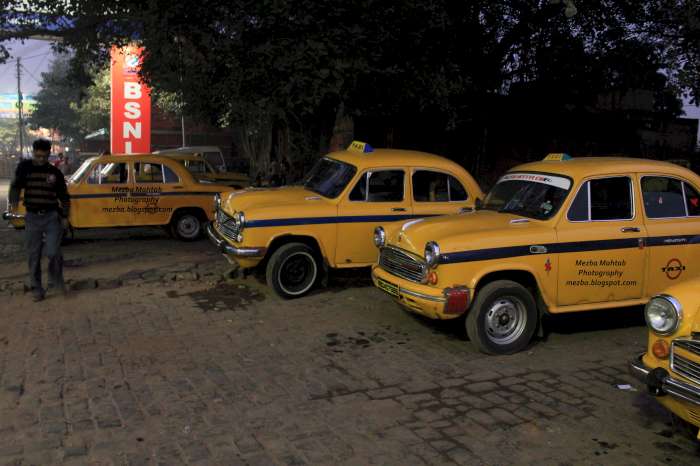
The famous yellow Ambassador cabs of Kolkata

So what to make of Kolkata? I loved being with my relatives, and they made me feel very welcome. We had lots of fun and the wedding events were a blast. However, the dirty city was quite a shock.

Kolkata was also my first impression of India - and I was left wondering if the rest of India would be like this. Thankfully, Delhi and Agra went quite a bit into making a more favourable impression of India.