Showing posts with label History. Show all posts

Saturday, June 01, 2019

The End of Ertugrul


This Wednesday, after 5 extra ordinary years, an almost perfect television series came to an end with an almost perfect finale episode. Yes, Diriliş: Ertuğrul was over.

Diriliş: Ertuğrul, also known in English as Resurrection: Ertugrul, or simply Ertugrul for short, is a Turkish television serial that has become a worldwide phenomenon. It tells the story of a 13th century Turkish warrior called Ertugrul who, by a series of extra ordinary actions and events, becomes the father of Osman, who in turn will found the Ottoman empire that will rule as a world super power for the next 600 years.


Ertugrul is a straight forward man who loves to fight for justice and truth. He is loathe to compromise on ethics, regardless of the consequences - facts that sometimes lead to conflicts with his brothers and others in his tribe.


The first two seasons sees him emerge from under the shadows of his father and his older brothers, and come into his own. His father respects his ideals and ethics, but his brothers are more practical and less loathe to endanger themselves or the tribe for the sake of justice. It is this schism that leads to Ertugrul heading off with his own followers, breaking away from the rest of the tribe, to follow his own destiny.


Along the way he and his people manage to establish themselves near the Byzantine borders. The Crusaders, the Greeks, and the ever present Mongols are all enemies that Ertugrul has to constantly deal with, along with the troubles of his own people.


The characters that surround Ertugrul are extremely appealing and well fleshed out. Sadly, despite his many enemies, the worst enemy is usually someone close to him who is backstabbing him for petty cash or worldly powers. The show effectively portrays the many layers of such tribal society life and the schemes that go on on a daily basis.

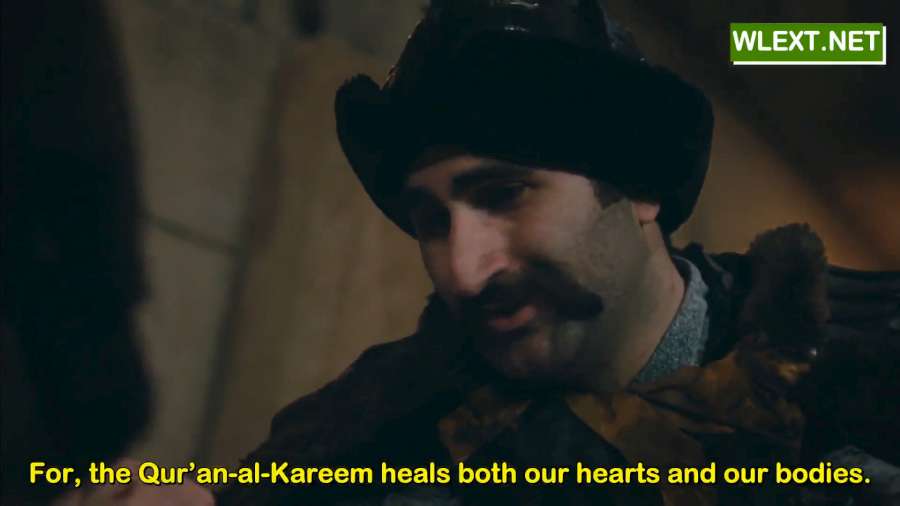


One of the attractions of this show was the presentation of Islamic ideals, values and morals in a very attractive (and entertaining) manner without coming across as preachy and verbose. These people LIVE the Islamic ideals.


Verses of the Quran are mixed along with parables and stories of the pious from whom Ertugrul and his band of heroes draw inspiration from. The story contains a heavy dose of Sufism that was a big influence of the early Ottomans. The plot was, for the most part, riveting and the script well written, particularly seasons 3, 4 and 5. This is when Ertugrul comes into his own as a man, as a leader, and as a power broker.
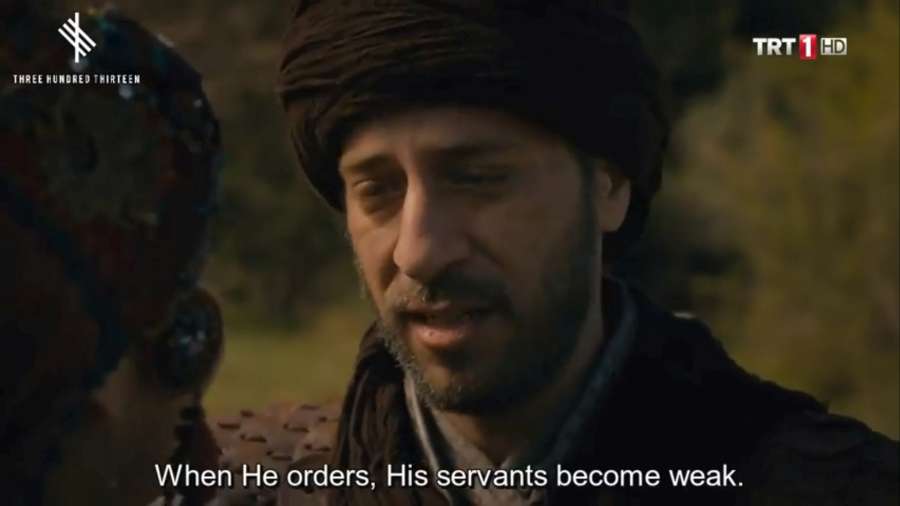

There's ample tragedy in the series as well. Good people die, sometimes as result of cruelty of their enemies, and other times due to betrayal and a moment of weakness. The story does not shy away from these moments, but sometimes lingers on them.


Each episode is long - almost 2 hours! There's 30 episodes every season. That's 60 hours per season, and at 5 seasons, you have almost 300 hours of Ertugrul. Yet most people who watch it love it, and watch it slowly to make it last even longer. The show is now a cultural phenomenon, watched not just in Turkey but around the world, particularly after Netflix picked it up.
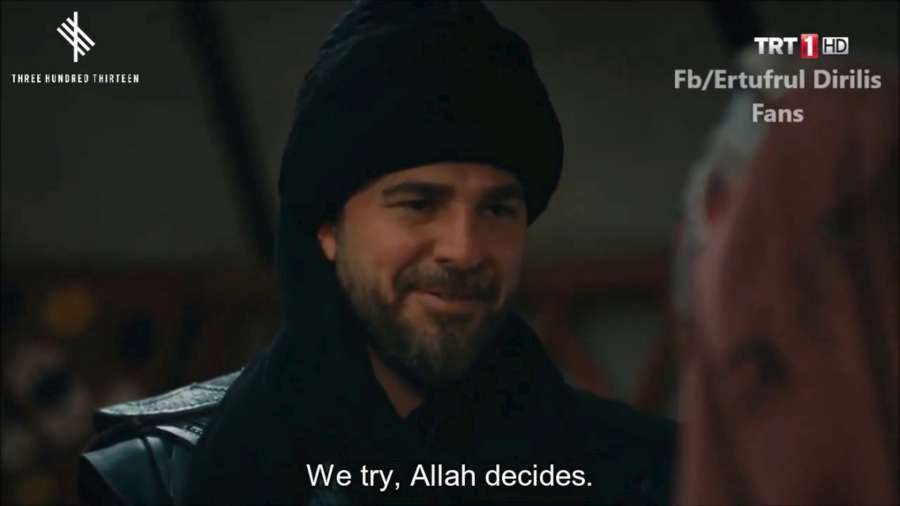

The show has successfully drawn its inspiration from modern times. Just like today, in the 13th century the Muslim world was badly divided, broken, and weak, and seemed to be on the verge of oblivion under Mongol cruelty. Yet along came a hero, chosen by Allah, who led a resurrection. Within a short span of time, these same Muslims were now on their way to conquering Constantinople. It's not hard to see why this show is so popular amongst today's Muslims. It gives them hope.

You will be missed, Ertugrul. Eyvallah!

Monday, November 14, 2016

AfD - The News That Could Occur Next Year in Germany

In a stunning upset, the Alternative for Germany (AfD) party has been declared the victor in the national elections, carving out a clear majority in the Bundestag.

The victory makes Frauke Petry, the spokesperson of the AfD, next in line for the Chancellery. The unexpected result also questions the very existence of EU, as Ms Petry repeatedly denigrated the institution during the campaign, and promised to take Germany out of EU if it meant, in her words, "subsidizing the lazy people of Greece and Spain with hard working German money". The results have thrown world markets into turmoil, further depressing the Euro.

Europe is in the midst of a stunning upheaval. Following from Brexit, and the shock election of Donald Trump as the President of USA (and the dismantling of NATO, followed by the cancellation of Paris Accord and the TTIP), Hungary, Holland have both voted to leave the troubled organization.

If Germany, a founding member and leader in the EU chooses to depart, it may well be the death blow to the EU. The Chinese yuan has already risen ten fold in thirteen hours since the election result.

It was thought for a long time that Germans would never warm to a political party pledging allegiance to neo Nazi ideals, denigrating migrants, peddling Islamophobia and anti-Semitic propaganda and insulting long standing allies. Indeed polls right the day before the vote gave a huge lead of 29.5 points to now outgoing Chancellor Angela Merkel.

The party has also pledged to take Germany back to its "Christian roots" and sought to strengthen the church and family values in Germany. Its closeness to the Vatican has also raised eyebrows, with the Pope choosing to remain silent on some of the outrageous statements issued during the campaign.

In hindsight, the Holy See must have seen something the polls had all missed. An anger at the current state of government, the bureaucracy in Brussels, the numerous Muslim migrants and the crimes alleged to have been committed by them (all debunked as false news by Politico Germany) and the "I-know-best" attitude of the ruling Christian Democratic Union.

It now remains to be seen how Europe will reshape itself in the years to come following this cataclysmic election.

Wednesday, November 09, 2016

Ten Thoughts on the Historic US Election

So America has done it. Elected Donald Trump as President.

(Picture courtesy: Rolling Stone)

Some thoughts (a postmortem, if you will).

1. The racists have won. 

There is no way to sugar coat it. The man ran on a racist platform, and was endorsed by the KKK, and won.

2. White people have nothing to fear.

Notice all the talks of losing Democrats about coming together, healing, congratulating the President and wishing him well. They are all white. People of color remember what Trump said about them.

3. Muslims in USA should seriously think about emigration.

Trump cannot target Hispanics or other immigrants as easily as Muslims. Immigration from Muslim countries will be curtailed. So it's really time to think about the long term future.

Also, kind of ironic to see famous sheikhs (you know who they are) who thought Clinton had it in the bag and couldn't resist a dig at her, saying how bad she was and why third parties deserve a look and how America was facing two bad choices. Now they are calling out to Allah for help and guidance. Should have done that before the election.

4. Trump did everything wrong, and still won.

No ground game, no significant ad buys, no support from the main party, no coalition of diversity, and still won. He proved in the US you can run on white supremacy and win a national election.

As Electoral-vote said

"Similarly, everything we thought we knew about campaigning was apparently in error. Conventions? Don't matter. Debates? Don't matter. Endorsements? Don't matter. High-profile defections? Don't matter. Missteps? Don't matter? Commercials? Don't matter. Ground game? Doesn't matter. An All-Star team of campaign surrogates, including one former president, one sitting president, and a wildly popular first lady? Doesn't matter. The "blue wall"? Not a thing."

5. All the polls were wrong. 

Like, ALL of them. This will have significant impact future elections. Why should anyone pay any attention to what the polls say?

6. Trump controls the House and the Senate. 

In the next 4 (or maybe 8) years he could appoint as many as 5 Supreme Court justices. America has really changed into a darker society yesterday.

7. Sexism, racist, and generally bigotry was always there, it just needed a champion and it found one.

Americans can't really say it's only a fringe minority who are racist. As a nation, yesterday they proved themselves to have no qualms about electing a racist bigot. 

8. Hillary cheated Bernie out of a nomination win in the Democratic primary.

Hillary lost in 2008 to an unknown called Barack Obama and did not want history to repeat itself. So this time around she made sure she was going to get the nomination by any means necessary. The Democratic primaries should have been a signal. Despite all the advantages of the party machinery, she had trouble beating an unknown old man from Vermont. 

When facing a choice between a fake and a real deal, voters usually choose the real deal. For all his faults, Trump was Trump, warts and all. No one knew what Hillary really stood for. 

9. For all our smugness in Canada, be prepared. 

Our Conservatives must have seen that being crazy, racist and a bigot can lead you to victory. Be prepared for more craziness from our right. And we thought Harper was bad.

10. Final thought:

If you as a white person feel frightened of a Trump presidency, then think of an immigrant, a Muslim, a Mexican, a person of colour, a gay, trans or marginalized person.

Monday, December 28, 2015

Bajirao Mastani The Latest in a Revisionist Agenda

Bajirao Mastani is the latest attempt by a revisionist agenda of corporate India to highlight any non-Muslim figures in the history of India. Before recent times, the fact remains that the glory of India has always been under Muslim rule for over the last 1000 years - from the Delhi Sultanate to the Mughal empire.Yet the Indian media only highlights Akbar (and to some extent Shah Jahan) because Akbar was the least Muslim of the lot. He founded his own religion (Dil Ilahi) and married a Rajput princess. He is the one glorified today in India and the rest of these Muslim rulers - who led India to heights that she hasn't reached even today - are forgotten. Some are actually vilified - such as Aurangzeb - with allegations against him debunked by many historians yet repeated all the time by those with a Hindutva agenda.


Instead, we are taught about the greatness of a man Bajirao, a petty man who managed to carve a little country for himself when the Mughal empire was in decline, and who actually hastened the decline leading to the acceleration of British control over all of India. Similarly they highlight the story of another loser called Maha Rana Pratap, who sniped at the Mughals from the sides and again gave the British an opening they wanted. Meanwhile, real heroes who faught against the British such as Haidar Ali and Tipu Sultan - no movies are made about them because they happen to be Muslim.

The inconvenient fact remains that for the vast majority of Indians, going from Muslim rule to British rule was merely a change of masters (and the British were the far cruel masters). Only the Muslims were affected as they used to be in power, so they fought for freedom. Not until the War of Independence (or the Indian Mutiny) did the rest of India join them. Gandhi was a much flawed man whose tactics did not win India independence - it was the guerrilla attacks by many others (such as Bhagat Singh and Master ji) and the pressure of American diplomacy amongst other factors that caused it. Gandhi did not even want independence; he wanted India to be made into a dominion. Yet today he is the father of a nation.

Monday, December 14, 2015

A Guide for my Pakistani Friends About 1971


  1. Realize that no matter how close we are, 1971 is a sensitive topic. Never, even jokingly, refer to modern Bangladesh as 'East Pakistan'. In fact, NEVER joke about 1971.
  2. Realize that we do not blame you personally or hold you personally responsible for 1971 in any way. We do, however, blame your government for trying to whitewash history and pretend nothing happened.
  3. Never say, 'oh, but both sides committed atrocities'. The scale does not even compare. It's like the Nazis saying, after they have gassed thousands of Jews, that one of them threw a rock at us.
  4. I know it's hard for you to comprehend, but the army that you look up to and revere, has committed horrible war crimes, genocides and atrocities.
  5. Never say 'it's the past and we should forget it in the spirit of forgiveness and brotherhood'. Forgiveness can only be given to those that sincerely repent and ask for it. Your government has denied any atrocities, let alone ask for forgiveness.
  6. Do not automatically start speaking to a Bengali person in Urdu. Know about 1952, and ask for permission first.
  7. Visit Bangladesh. You will find almost all Pakistanis speaking positively about their time there, and visit the War Museum in Dhaka. Educate yourself about your own history.
  8. Ask your own government and challenge your own countrymen as to why 1952, 1971 are forgotten chapters in your history.
  9. Finally, stop blaming India or Indian conspiracies and start building your own country. Start tolerating, no rather, start accepting those who speak and think and believe differently than you. The mistakes you made in 1971 are being repeated today in your country on the Ahmedis and on Baluchistan. Why?

Thursday, April 23, 2015

You guys have such a Hindu culture!

"You guys have such a Hindu culture!"

The above was said to me by a Pakistani acquaintance just as we were discussing the 3-0 drubbing that Bangladesh handed out to Pakistan in the recent cricket ODI series. He wanted to know if our player Soumya Sarkar was a Hindu. 

"Honestly, I don't know." I replied. "I was curious about it as well. Sarkar is a last name common to both Hindus and Muslims in Bangladesh, and Soumya is just a first name."

That's when he said it. 

"You Bengalis are so much like Hindus!"

"Please explain." I asked him, in the mood for a good argument.

He struggled, of course.

"I ... don't know exactly," He said. "Your names. I knew a Bengali Muslim called Bijoy. That's a Hindu name. Your dresses ... Your culture ... You guys celebrate holidays like new year that is un-Islamic."

In a calm (so unlike me!) and logical manner, I tackled all his arguments (but of course he wouldn't budge from his opinion).

Typical Arrogance

Realize the statement "Bengali has a huge Hindu influence", no matter it's validity or lack thereof, comes from a base of arrogance. There is a huge arrogance amongst speakers of Urdu (and sometimes Farsi) - that they are somehow more Islamic, just by virtue of their language and lineage.

In 1952, the ruling West Pakistani elite viewed support for Urdu as support for an Islamic identity, and support for Bangla as being a traitor to "Islamic" Pakistan. Jinnah actually had the audacity to say, "Urdu embodies the best that is in Islamic culture and Muslim tradition and is nearest to the languages used in other Islamic countries." His arrogant nature was at its peak when he asked a few Bengali students, on a visit to then East Pakistan (now Bangladesh), whether Bengalis could boast of any great men of letters in their history.

Pakistanis also uniquely believe Pakistan is an "Islamic" country, and therefore anyone who is Muslim should support Pakistan (and anything Pakistani, like the Urdu language). Thus Shoaib Malik infamously thanked all Muslims for supporting Pakistan in the first World T20 final when they played against India, ignoring the man of the match award which went to an Indian Muslim. Anything not seen as "Pakistani", such as the Bengali language, must therefore be non-Muslim, or Hindu.

Pride of Lineage

Urdu speaking Muslims of the South Asian subcontinent are almost always proud of their heritage. They see themselves as more Muslim, or more authentic Muslim, while the dark skinned Bengalis are seen as recent converts from Hinduism and therefore less pure. Nothing of course, could be further from the truth. Islam came to the subcontinent at roughly the same time, and whether you are a Muslim from Pakistan, India, Bangladesh, Sri Lanka or Bhutan - all of your ancestors were likely Hindus or Buddhists. The Arabs who conquered and settled in the Indian subcontinent viewed everyone as from "Hind". Yet, look what Ayub Khan, the President of Pakistan, once said.

Bengali Islam was the religion of the indigenous depressed peasant convert; in West Pakistan, Islam was the faith of the conquerors, the rulers, the courtiers. Bengali Islam was a faith associated with the "downtrodden races".

You say Hindu influence like it's a bad thing

It is obvious, undeniable and academically incorrect to say there is no Indian influence in the South Asian culture. From Peshawar to Chittagong, we have similar food, clothes, mannerisms, and so on. We all watch the same Bollywood movies and dance to the same Bollywood songs. We also have our regional variances, and thus you have Pashto, Malayalam, Bengali, Tamil etc. - multiple languages and cultures. And all these cultures have some common elements, and some variances - and within them you have people of many religions.

Where Bengali Muslims have differentiated from Urdu speaking Muslims is that even by adopting Islam, we have not lost our culture or language. In Pakistan (especially) there is a drive to Arabize themselves - seeing it as more Islamic. This was prominent under the Zia regime. When Bangladesh was part of Pakistan, they tried it on the Bengalis (and failed). In 1949 the government of East Pakistan (an Urdu speaking governor) set up a East Bengal Bhasha (Language) Committee which said Bengali should be written in Arabic script. The government saw the whole language as "corrupt" and tried to change it. The report actually stated, ""Sanskritization of the language should be avoided" and it was to exclude the Sanskrit words from Bengali and replace them by Urdu, Arabic or Persian words to “conform to the Islamic ideology."

Bengalis reject such false standards of "Islamism".

The small stuff - cultural, not religious

So when an Urdu speaking person complains we Bengali muslims have a lot of Hindu influence, all what I said above is what is really going on. Arrogance, a false pride of lineage and Islamism, and an attempt to be Arab. Yet, of course they can point to the small stuff like our names, our dress and our celebrations. Let's get to that.

What is wrong with a name like Bijoy?

It means victory. Same as Fatih. And it has the same roots as say Nasr. Yet, is Fatih and Nasr more "Islamic", simply because it's Arab? What about the names of the famous Tabiyeen who lived during the Prophet's time, whose name was As-hum? You know him better as the Najjashi. Those are not Arabic names. Neither is Bilal. And we know Salman as a Persian name. It is a good meaning and being Muslim that makes your name Islamic, not just Arabic. And may I remind you, of the 25 prophets named in the Quran, only 4 were Arabs. The rest all had non-Arab names.

Is there anything wrong with celebrating Boishakhi?

No, not really. Depends on what you do when you "celebrate". There is nothing really Islamic, or un-Islamic, about a holiday. It's just a day with an interesting history.

However, as I said, those are the small stuff. Undeniably, we have commonalities with people who lived in our lands for centuries and share the same culture and food. No, a statement like that is not about the small stuff. It has darker roots.

And the ironic tragedy is that such arrogance, coming from a supposedly "Muslim" culture, is what broke up the largest Muslim state of the twentieth century.


Friday, March 25, 2011

Can a Bangladeshi Support the Pakistan Cricket Team?


This Wednesday, March 23, 2011, Pakistan played West Indies in a quarter final match of the cricket World Cup. It was a knock-out game - the loser would go home and the winner on to the semi finals. The venue was Dhaka, Bangladesh. However, one could be mistaken for thinking Pakistan was playing a home game, with the 25,000 fans at the stadium solidly behind the men in green, some even painting the Pakistan flag on their cheeks or waving the star and crescent flag [source: Dawn].

On Facebook, I posted a Youtube video of a Bangladeshi spectator and a Pakistani visitor exchanging T-shirts. I was also supporting Pakistan over West Indies. This prompted a discussion by some people that these Bangladeshi supporters of the Pakistan team were a "disgrace to the nation". As a Bangladeshi, I was told, I should not be supporting the Pakistan team (which I was in this game).

This is why.
…… we were told to kill the hindus and Kafirs (non-believer in God). One day in June, we cordoned a village and were ordered to kill the Kafirs in that area. We found all the village women reciting from the Holy Quran, and the men holding special congregational prayers seeking God’s mercy. But they were unlucky. Our commanding officer ordered us not to waste any time ...
- Confession of a Pakistani Soldier

Gendercide Watch has an account of the genocide unleashed by the Pakistan army on the civilian population of Bangladesh (then East Pakistan) in 1971. Information can also be found on Genocide Bangladesh.

The details are horrible. The number of dead in Bangladesh in 1971 was almost certainly well into seven figures. It was one of the worst genocides of the World War II era, outstripping Rwanda (800,000 killed) and probably surpassing even Indonesia (1 million to 1.5 million killed in 1965-66) [Source: GW]. Apart from the killings, as many as 400,000 women were raped (and these figures are from unbiased Western sources; Bangladeshi numbers quote a higher number).

Now why do these atrocities, which occurred over 40 years ago, still have a resonance today? In particular, these are due to the shameful attitudes of modern day Pakistani citizens and their government. For example, if you talk to an average Pakistani, his or her attitude to 1971 can be categorized as one of the following:

1) These atrocities did not happen. The numbers are wildly exaggerated (possibly an Indian conspiracy to destabilize the "brotherly relations" between Pakistan and Bangladesh). Yes, there were some deaths, since this was a military action, but not anywhere close to the numbers mentioned here.

2) The army only had orders to kill Hindus.

3) Yes, these atrocities happened. But so what? It was a long time ago, and I, a modern day Pakistani, had nothing to do with it. So why should I apologize?

4) This was a shameful chapter in Pakistani history and I am truly sorry. Pakistan should formally apologize to Bangladesh and acknowledge her actions.

Sadly, not enough Pakistanis feel like the last scenario. Recently, former cricket captain Imran Khan has demanded an official apology from the Government of Pakistan to the people of Bangladesh for the atrocities allegedly committed by the Pakistan Army in 1971 [Source: 1 and 2].

As for (1), it's just not true because Pakistan's own Hamoodur Rahman Commission agreed that genocide occurred and recommended their leaders to be tried. As for (2), so what? Killing "only Hindus" is supposed to make genocide acceptable?

It's (3) that provokes debate. Should citizens today apologize for actions committed by their government years ago? I believe that in the absence of an official apology by their government, for actions that occurred with full support of the elite amongst the citizens of the time, likely their fathers or that generation, today's generation bears some responsibility to acknowledging the hurt and shame of 1971.

Why did, then, Pakistan get such support in Dhaka on Wednesday? I believe it was due to several of the following reasons.

1) They were playing West Indies, who had badly defeated Bangladesh in the group stages. People therefore wanted to see West Indies similarly humiliated.

2) In the absence of their home team, people support their neighbours or those they feel a cultural closeness with. This is why Sri Lanka, India or Pakistan get good support in Dhaka, or why Pakistan enjoyed good support when they played in Colombo.

3) It's been 40 years. If we still remained angry we wouldn't support England in any games (you could write an encyclopedia on the atrocities committed by the British Empire, apologies for which are still to be dragged out in many instances), or even Australia (the descendants of the worst of British convicts).

Personally, I keep politics and sports aside, and I genuinely like this Pakistani team. They play good cricket, are led by a terrific captain (who leads from the front), are a bunch of talented athletes that have overcome huge hurdles in their God-forsaken country to reach this stage. The Bangladesh cricket team would do well to learn from the attitude and resolve of these players.

Besides (other than cricket) Bangladesh now no longer has any need to have an inferiority complex of Pakistan. By ever standard our country is in much better shape than theirs. The Guardian congratulated Bangladesh on a vibrant economy and a strong women's movement on her 40th birthday, something unimaginable in Pakistan. It's no longer a basket case. In fact, the Wall Street Journal recently compared Pakistan and Bangladesh, and Pakistan can only look on in envy. This is why today most Pakistanis support Bangladesh and wistfully imagine how different the scenario would have been had the two nations prospered together, while Bangladeshis are proudly marching ahead charting their own course.

Of course, on March 30, 2011, when India take on Pakistan in the semi final, I will be fully supporting India, inshAllah. :-)